
















037. 現代絵画の地平:概念・物質・視覚の再定義(第4部:デイヴィッド・ホックニー — 視覚の解体とデジタルタッチ)
イギリスの巨匠**デイヴィッド・ホックニー(1937–)**は、人間が実際に世界をどのように見ているのかを絶えず問い直すことで、6年以上にわたり絵画の可能性を再定義し続けてきました。カメラのレンズのように単一の静的な視点に鑑賞者を固定する伝統的なルネサンス的遠近法を拒絶し、ホックニーは人間の自然な視覚は動的であり、連続的で、身体の動きと深く結びついていると主張します。彼の革新的な「逆遠近法」の理論と多視点による構図を通じて、ホックニーは平らなキャンバスを生きた、動的な空間体験へと拡張しています。
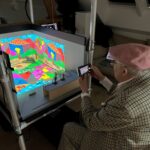
キャリアを通じて、ホックニーはドローイングや描線(マーク・メイキング)の物理的な快楽を一度も捨てることなく、新しいテクノロジーを受け入れてきました。キュビスムにインスピレーションを得た象徴的なフォト・コラージュ(「ジョインナブルズ」)やモニュメンタルな多分割キャンバスの風景画において、彼は数十の異なる視点を組み立て、人間の眼が景色の世界をさまよう様子を模倣しました。近年、ホックニーは主要なメディアとしてiPadを導入したことで有名です。デジタル画面を冷たく自動化されたツールとして扱うどころか、彼はそれを光るスケッチブックとして扱い、スタイラスによるタッチとデジタルのレイヤー構造を活用して、自然の移ろいゆく光や微細な質感を並外れたスピードで捉えています。
デヴィッド・ホックニーのiPadドローイング
伝統的な描線技法とデジタルテクノロジーの流動的な統合は、手仕事の熟達と現代メディアとの間の時代遅れの隔たりに直接挑むものです。ホックニーにとって、油彩絵の具、木炭、あるいはiPadの画面のいずれを使用しようとも、芸術の核心は「手、眼、そして心の間の親密なつながり」であり続けます。最終的にホックニーは、現代絵画が物理的な顔料だけに限定されないこと、むしろ人間的な知覚の純粋な歓喜を祝福する、絶えず進化する視覚的自由の試みであることを証明しているのです。
🔑 Key Vocabulary & Concepts
- Reverse Perspective & Dynamic Vision(逆遠近法と動的視覚)
- 画面の奥の1点(消失点)に向かって収束するルネサンス的遠近法(カメラの眼)に対し、鑑賞者側に向かって視界が広がる構図。人間が眼を動かし、身体を動かしながら世界を捉える動的な知覚を視覚化する手法。
- Multi-Viewpoint Compositions(多視点構図)
- 複数の角度や時間軸で捉えた視点・描線を1つの画面上にレイヤー状に繋ぎ合わせる構成。網膜が空間をスキャンしていく「生きられた時間」を画面に定着させる。
- The Glowing Sketchbook (iPad / Digital Touch)(光るスケッチブックとしてのデジタル・タッチ)
- デジタルメディアを自動化や複製ツールとしてではなく、手に持ったスタイラスの動き、発色、即時性を活かした「新たな触覚的描線メディア」として拡張するアプローチ。
- Intimate Connection of Hand, Eye, and Heart(手・眼・心の親密なつながり)
- 描画材がアナログの絵の具や版画インクであれ、デジタル画材であれ、画家の身体的知覚と感情が手に伝わり、画面へと刻まれるプロセスこそが絵画表現の本質であるという考え方。
❓ Comprehension Quiz & Answers
- Q1: Why does David Hockney reject traditional single-point Renaissance perspective?
- 正解: B) Because it freezes the viewer at a single static point like a camera lens, whereas natural human vision is dynamic and moving.
- 解説: 第1段落の “Rejecting the traditional Renaissance perspective—which freezes the viewer at a single, static point like a camera lens—Hockney argues that natural human vision is dynamic, continuous…”(カメラレンズのように鑑賞者を単一の静的視点に固定するため拒絶し、自然な視覚は動的であると主張している)から読み取れます。
- Q2: How does Hockney approach creating artworks on digital tools like the iPad?
- 正解: B) He treats the screen as a glowing sketchbook, using stylus touch and digital layers to capture light and texture.
- 解説: 第2段落の “treats it as a glowing sketchbook, utilizing stylus touch and digital layering to capture the shifting light and subtle textures…”(画面を光るスケッチブックとして扱い、スタイラスのタッチとデジタルレイヤーで光や質感を捉えている)から読み取れます。
- Q3: According to the article, what is the core of art for Hockney regardless of whether he uses oil, charcoal, or an iPad?
- 正解: B) The intimate, unbroken connection between the hand, the eye, and the heart.
- 解説: 第3段落の “whether using oil paint, charcoal, or an iPad screen, the core of art remains the intimate connection between hand, eye, and heart.”(油彩、木炭、iPadのいずれを用いても、芸術の核心は手・眼・心の親密なつながりである)から読み取れます。
▼ Read in English (Click to expand)
37. David Hockney — Deconstructing Vision and the Digital Touch (Contemporary Painting Series – Part 4)
British master David Hockney (1937–) has spent over six decades reinventing the possibilities of painting by continuously questioning how human beings actually see the world. Rejecting the traditional Renaissance perspective—which freezes the viewer at a single, static point like a camera lens—Hockney argues that natural human vision is dynamic, continuous, and deeply linked to bodily movement. Through his innovative theory of “Reverse Perspective” and multi-viewpoint compositions, Hockney expands the flat canvas into a living, moving spatial experience.
Throughout his career, Hockney has embraced new technologies without ever abandoning the physical pleasure of drawing and mark-making. In his iconic cubist-inspired photo collages (“joinables”) and monumental multi-canvas landscapes, he assembled dozens of distinct perspectives to mimic how the human eye wanders across a scene. In recent years, Hockney famously adopted the iPad as a primary medium. Far from treating the digital screen as a cold, automated tool, he treats it as a glowing sketchbook, utilizing stylus touch and digital layering to capture the shifting light and subtle textures of nature with extraordinary speed.
Hockney’s fluid integration of traditional mark-making and digital technology directly challenges the outdated division between manual skill and modern media. For Hockney, whether using oil paint, charcoal, or an iPad screen, the core of art remains the intimate connection between hand, eye, and heart. Ultimately, Hockney demonstrates that contemporary painting is not confined to physical pigments alone; rather, it is a constantly evolving exercise in visual freedom that celebrates the pure joy of human perception (Claim the room).
本記事の英語原文(読解クイズ付き)は、note.comの連載『アート系英文読解』で公開しています。アートの知識と一緒に英語力を身につけたい方は、ぜひ[こちら]から挑戦してみてください!
【筆者プロフィール&作品】
このコラムは、現代アーティスト・川田祐子が執筆しています。 実際の銅版画作品は、こちらのギャラリーサイトからご覧いただけます。 👉 https://kawadayuko.jp/printmaking/
