





















050. ミニマリズムの変遷:形態・物質・空間の純化(第2部:スペシフィック・オブジェと工業的ミニマリズム:ドナルド・ジャッドとカール・アンドレ)
20世紀初頭の先駆者であるカジミール・マレーヴィチやピエト・モンドリアンが精神的・宇宙的理想を表現するために幾何学的な還元を追求したのに対し、1960年代のアメリカ・ミニマリズムの作家たちは、あらゆる象徴主義、メタファー(隠喩)、そして個人的な筆致を剥ぎ取りました。1965年の画期的な論文『スペシフィック・オブジェ(固有の物体)』において、アーティストであり批評家でもあったドナルド・ジャッドは、従来の絵画——長方形の額縁の中に閉じ込められ、イリュージョン(錯覚)的な奥行きに依存するもの——と、従来の彫刻——台座の上で擬人的なパーツを組み合わせて作られるもの——は、ともに行き詰まり(枯渇点)に達したと論じました。前進するために、ジャッドは絵画でも彫刻でもなく、現実の空間の中に自律して存在する新しいカテゴリーの三次元作品を提唱したのです。
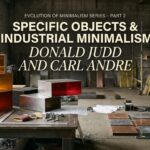
アーティストの感情的な手仕事の痕跡を一切排除するため、ジャッドは商業的な金属加工業者に制作を委託し、陽極酸化(アルマイト処理)アルミニウム、冷延鋼板、真鍮、そして着色プレキシガラス(アクリル樹脂)といった工業素材を用いました。ギャラリーの壁から片持ち梁のように直接突き出した象徴的な垂直の「スタック(積み重ね)」のように、同一のユニットを数学的な等間隔で配置したジャッドの箱は、工業表面が持つ生の物理的存在感(Objecthood)に依拠しています。光はブラシ仕上げの金属に反射し、半透明のアクリルを透過することで、色彩とヴォリュームを描かれたイリュージョンではなく、文字通りの媒介されない物理的事実へと変えるのです。

Donald Judd, Untitled, 1967, Twelve units, each 9 x 40 x 31″ (22.8 x 101.6 x 78.7 cm), installed vertically with 9″ (22.8 cm) intervals, Painting and Sculpture
https://www.moma.org/collection/works/81324
同様に、カール・アンドレは台座を完全に取り払い、耐火煉瓦、杉の角材、あるいは銅・鉛・鋼鉄の正方形のプレートといった規格化された工業ユニットをギャラリーの床にぴったりと平らに配置することで、彫刻のヒエラルキーを解体しました。自身の平らな金属グリッドの上を直接歩くよう鑑賞者を招き入れることで、アンドレは彫刻を「遠くから眺める対象(オブジェ)」から、重力、素材の重み、そして身体的な出会いによって定義される体験的な「場所(プレイス)」へと変容させたのです。
🔑 Key Vocabulary & Concepts
- “Specific Objects”(スペシフィック・オブジェ/固有の物体)
- ドナルド・ジャッドが1965年に提唱した概念。壁に掛けられたイリュージョンとしての「絵画」でもなく、台座の上の擬人的な「彫刻」でもない、現実の三次元空間に自律的に存在する新しい作品形態。
- Elimination of the Artist’s Hand & Industrial Fabrication(作家の手跡の排除と工業発注)
- 筆致や削り跡といった主観的・感情的な痕跡を消すため、専門の金属・樹脂加工工場に精密な制作を依頼する手法。素材の物性(Objecthood)そのものを純粋に提示する。
- Unmediated Material Facts(媒介されない物理的事実)
- 絵の具で「金属の光沢」や「奥行き」を描く(模倣する)のではなく、陽極酸化アルミニウムの反射や着色プレキシガラスの光の透過そのものを、現実の空間における直接的な色彩・光体験として提示すること。
- Sculpture as “Place”(場所としての彫刻)
- カール・アンドレによる彫刻の水平化。台座を廃して床に金属板を敷き詰め、鑑賞者がその上を歩いて足裏の触覚や金属の響き・重力を体感することで作品が成立する空間概念。
❓ Comprehension Quiz & Answers
- Q1: What did Donald Judd argue in his 1965 essay “Specific Objects”?
- 正解: B) That traditional illusionistic painting and pedestal-based sculpture were exhausted, calling for self-contained three-dimensional works in real space.
- 解説: 第1段落の “traditional painting… and traditional sculpture… had reached an exhaustion point. To move forward, Judd proposed a new category of three-dimensional work that was neither painting nor sculpture, but a self-contained physical entity existing in real space.”(従来のイリュージョン絵画と台座彫刻は枯渇点に達しており、現実空間に自律して存在する三次元作品を提唱した)から読み取れます。
- Q2: Why did Donald Judd use commercial fabricators and materials like anodized aluminum and Plexiglas?
- 正解: A) To eliminate personal brushwork and emotional traces, allowing raw industrial surfaces, light, and volume to exist as literal physical facts.
- 解説: 第2段落の “To eliminate any trace of the artist’s emotional hand, Judd turned to commercial fabricators and industrial materials… turning color and volume into literal, unmediated facts rather than painted illusions.”(感情的な手仕事の痕跡を排除するため商業加工業者と工業素材を用い、色彩とヴォリュームを描かれたイリュージョンではなく文字通りの物理的事実へと変えた)から読み取れます。
- Q3: How did Carl Andre transform the traditional experience of sculpture?
- 正解: B) By placing flat grids of standardized materials like metal plates or firebricks directly on the floor, inviting viewers to walk across them as an experiential “place.”
- 解説: 第3段落の “placing standardized industrial units—such as firebricks, cedar timbers, or square plates of copper, lead, and steel—flush on the gallery floor. By inviting viewers to walk directly across his flat metal grids, Andre transformed sculpture… into an experiential ‘place'”(規格化された金属板や耐火煉瓦を床に平らに配置し、鑑賞者がその上を直接歩くことで体験的な「場所」へと変容させた)から読み取れます。
▼ Read in English (Click to expand)
50. Specific Objects & Industrial Minimalism — Donald Judd and Carl Andre (Evolution of Minimalism Series – Part 2)
While early twentieth-century pioneers like Kazimir Malevich and Piet Mondrian pursued geometric reduction to express spiritual and cosmic ideals, American Minimalists of the 1960s stripped away all symbolism, metaphor, and personal brushwork. In his landmark 1965 essay “Specific Objects,” artist and critic Donald Judd argued that traditional painting—trapped inside a rectangular frame and reliant on illusionistic depth—and traditional sculpture—built around anthropomorphic parts on a pedestal—had reached an exhaustion point. To move forward, Judd proposed a new category of three-dimensional work that was neither painting nor sculpture, but a self-contained physical entity existing in real space.
To eliminate any trace of the artist’s emotional hand, Judd turned to commercial fabricators and industrial materials such as anodized aluminum, cold-rolled steel, brass, and colored Plexiglas. Arranged in identical, mathematically spaced intervals—such as his iconic vertical “stacks” cantilevered directly from the gallery wall—Judd’s boxes rely on the raw physical presence (objecthood) of industrial surfaces. Light reflects off brushed metal and filters through translucent acrylic, turning color and volume into literal, unmediated facts rather than painted illusions.
Similarly, Carl Andre dismantled sculptural hierarchy by removing the pedestal entirely and placing standardized industrial units—such as firebricks, cedar timbers, or square plates of copper, lead, and steel—flush on the gallery floor. By inviting viewers to walk directly across his flat metal grids, Andre transformed sculpture from an object to be gazed at from afar into an experiential “place” defined by gravity, material weight, and physical encounter.
本記事の英語原文(読解クイズ付き)は、note.comの連載『アート系英文読解』で公開しています。アートの知識と一緒に英語力を身につけたい方は、ぜひ[こちら]から挑戦してみてください!
【筆者プロフィール&作品】
このコラムは、現代アーティスト・川田祐子が執筆しています。 実際の銅版画作品は、こちらのギャラリーサイトからご覧いただけます。 👉 https://kawadayuko.jp/printmaking/
